

Steel Push Pier Installation Vero Beach FL
Steel tubes pressed down to firm ground can carry a heavy house or building that has started to sink. Call 772-571-4702 for a free look.
Family-Owned · Free Estimates · Lifetime Transferable Warranty
Call 772-571-4702Quick Answer
Steel push piers are galvanized steel tubes that are hydraulically pressed into the ground beneath a footing, using the weight of the building as resistance, until they reach load-bearing soil or rock. They suit heavier Vero Beach homes and light commercial buildings. Vero Beach Foundation Repair offers free estimates, and our repairs carry a lifetime transferable warranty.
How does a steel push pier work?
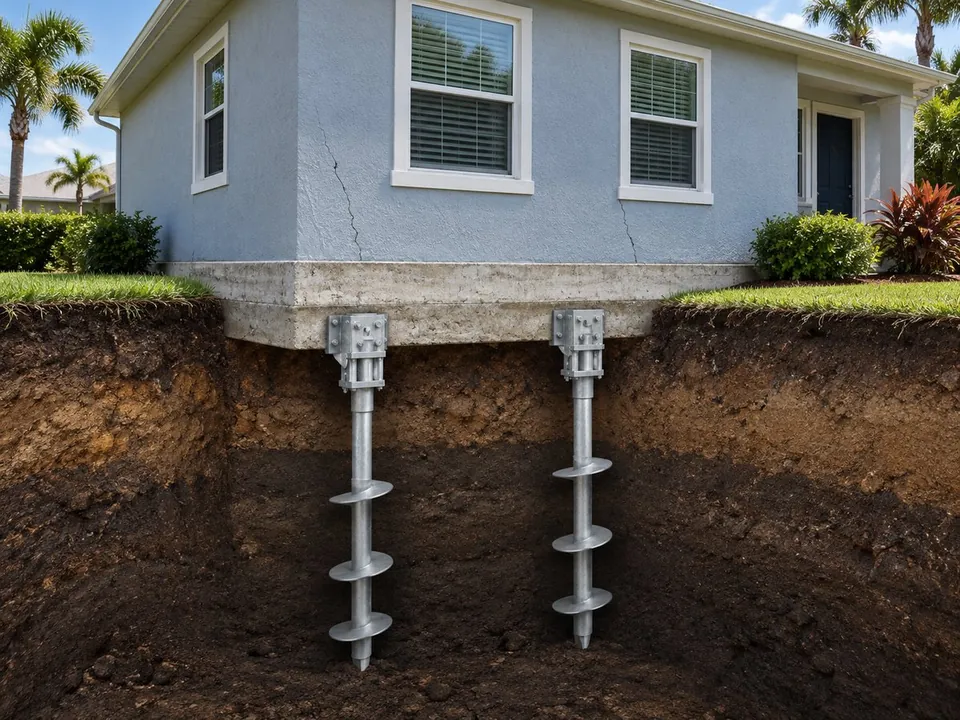
A bracket is fixed to the footing at the settled spot. A hydraulic ram then presses a steel tube straight down through the bracket, section by section. The building itself acts as the counterweight, so the pier keeps going until the ram can no longer move it, which means the tube has reached soil or rock that can carry the load.
That "push until it stops" step is the useful part. It gives the installer a direct reading of how much weight the pier can hold, and a pier that is pushed to a measured resistance is tied to real ground, not a guess about the top layer.
When is a push pier a better fit than a helical pier?
Push piers lean on the weight of the structure, so they work best when the building is heavy. A two-story home, a block-and-stucco house with a tile roof, or a small commercial building often has the dead weight needed. Lighter buildings may not, and helical piers can be the better choice there.
Push piers also reach deep. In areas along the Atlantic Coastal Ridge where the firm layer sits well below loose sand, a pushed tube can travel through the soft zone and end in material that will not compress.
What conditions in Vero Beach lead to push pier jobs?
The Indian River Lagoon side of the barrier island and the lagoon-front mainland both have wet sand, and groundwater moves with tides and heavy rain. Over years, a heavy home on shallow footings can settle faster than a light one in the same soil.
Older homes matter too. A house built decades ago may sit on a thin footing with little steel, and a repair has to lift and support that footing without breaking it. A bracket sized for the footing and placed at planned spacing spreads the load safely.
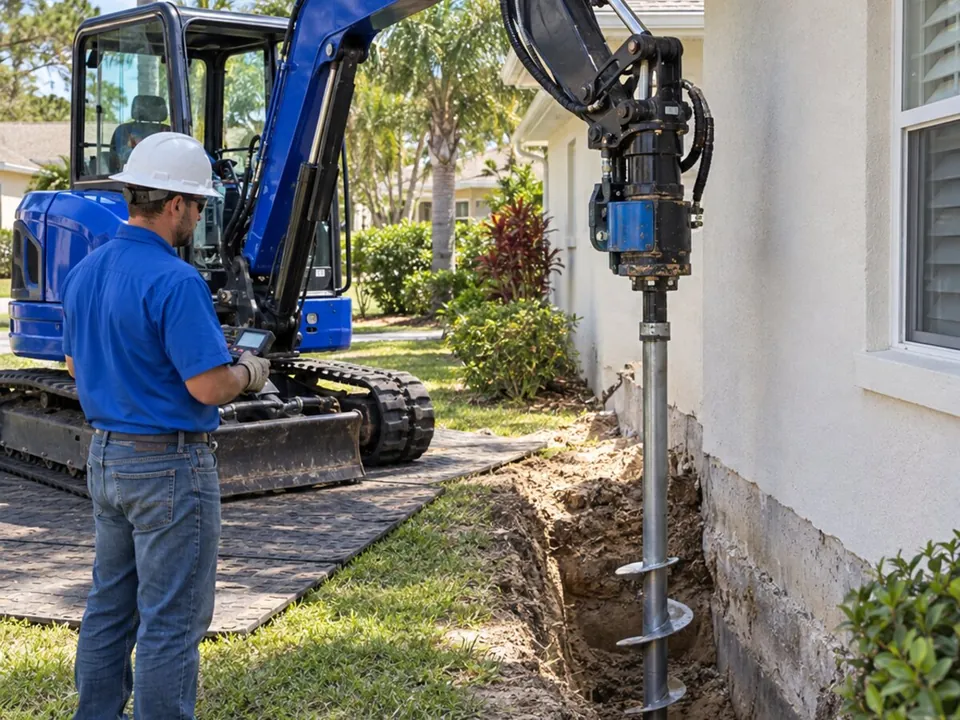
What does the installation involve?
The speed of each stage varies with soil, weather and access. A few piers may take a day. A full house takes longer.
- Utilities are marked and the work area is cleared
- The soil beside the footing is dug out at each pier location
- A bracket is fixed to the footing and the first steel tube is pressed down
- More tubes are added until the ram reaches the target resistance
- The structure is raised if planned, then locked off on the pier
- Soil is backfilled and the site is tidied
What are the strengths and limits?
Strengths: a measured load reading, deep reach, steel that does not rot, and no need for the slab to be broken up in most cases. Limits: the method needs room beside the footing for the dig and the ram, and it needs weight on the footing to push against.
If neither fits your building, injection piers or a mix of methods may. Your estimator should explain why a given type was chosen and show you the pier layout.
What does a push pier job cost?
Cost follows pier count, depth, the amount of lift and how hard the ground is to dig. Waterfront lots with limited access cost more than open yards. A single pier is a modest job. A full perimeter is a large one.
Estimates are free. Ask for the pier count, spacing and warranty terms in writing. Our repairs carry a lifetime transferable warranty.
Which offices review the work?
Structural repair on a house normally needs a building permit. In the Vero Beach area the office depends on your address: the county building division for unincorporated land, or the city or town building department for places like Sebastian and Indian River Shores. Oceanfront work seaward of the state's coastal construction line also needs a Florida DEP permit.
What should I ask before I agree to push piers?
Ask how many piers, at what spacing, and what resistance each will be pushed to. Ask what coating the steel has, since salt air near the lagoon is hard on bare metal. Ask who handles the permit and whether an engineer's letter is part of the job.
Where we install push piers
We install push piers across the Vero Beach area. See our local pages for Sebastian and Stuart, and our page on commercial foundation repair for larger buildings. To book a visit, use the contact page.
Steel Push Piers FAQs
How deep do push piers go?
Until they hit soil or rock that can carry the load. That depth is found during installation and varies by lot.
Are steel push piers galvanized?
Push piers are normally made of galvanized steel so they resist corrosion. Ask your installer for the coating details, especially near saltwater.
Can a push pier lift my house?
Yes, after the piers are set the structure can be raised in small steps. A full return to level is not always safe, because lifting too quickly can crack walls and pipes.
Will it work on a light structure?
Not always. Push piers need weight to push against, so a light building may suit helical piers better.
Do I have to leave the house?
Usually not. Work is outside along the footing. Ask the estimator if your plan includes interior work.
Is there a warranty?
Our repairs carry a lifetime transferable warranty. Ask for the written terms before work starts.
Where We Work
- Steel Push Piers in SebastianWe serve Sebastian and nearby
- Steel Push Piers in Port St. LucieWe serve Port St. Lucie and nearby
- Steel Push Piers in StuartWe serve Stuart and nearby
- Steel Push Piers in Hutchinson Island SouthWe serve Hutchinson Island South and nearby
- Steel Push Piers in Indian River ShoresWe serve Indian River Shores and nearby
Get Your Steel Push Piers Estimate
Call 772-571-4702 or send the form. We will set up a free visit.