

Soil Stabilization Vero Beach FL
Loose or washed-out soil cannot hold a slab, wall or driveway for long. Call 772-571-4702 to ask how to firm it up.
Family-Owned · Free Estimates · Lifetime Transferable Warranty
Call 772-571-4702Quick Answer
Soil stabilization strengthens weak ground by injecting grout or a binding material into it, so the soil can carry weight and resist washout. It is used under slabs, beside seawalls, behind retaining walls and under pavement. Vero Beach Foundation Repair offers free estimates, and our repairs carry a lifetime transferable warranty.
What does "soil stabilization" actually mean?
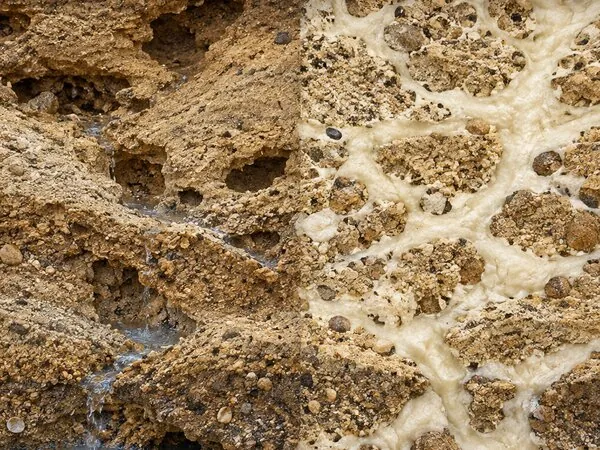
It means changing the ground so it behaves better. Loose sand compacts under weight and washes with water. Stabilization adds a binder that glues the grains together, fills the gaps, or both, so the same soil holds more load and loses less to water.
Crews do it by drilling or driving small injection points and pumping material in stages. The material spreads, sets and leaves a stronger mass. It differs from injection piers, which build columns to carry a footing, though the equipment overlaps.
Why does ground weaken in Vero Beach?
The upper layer along this stretch of the Atlantic Coastal Ridge is largely quartz sand, and under it lies the Anastasia Formation, a layer of coquina (cemented shell) and sandy limestone that shallowly underlies the ridge along most of Florida's east coast. Sand shifts. Rock does not.
Water is what turns sand into a problem. Hurricane Nicole, which made landfall near Vero Beach as a Category 1 storm on November 10, 2022, was a reminder of how much water and wave action this coast can see. Even ordinary summer storms, poor drainage and leaking pipes can carry fine sand away over time.
What are the signs of weak or washed-out soil?
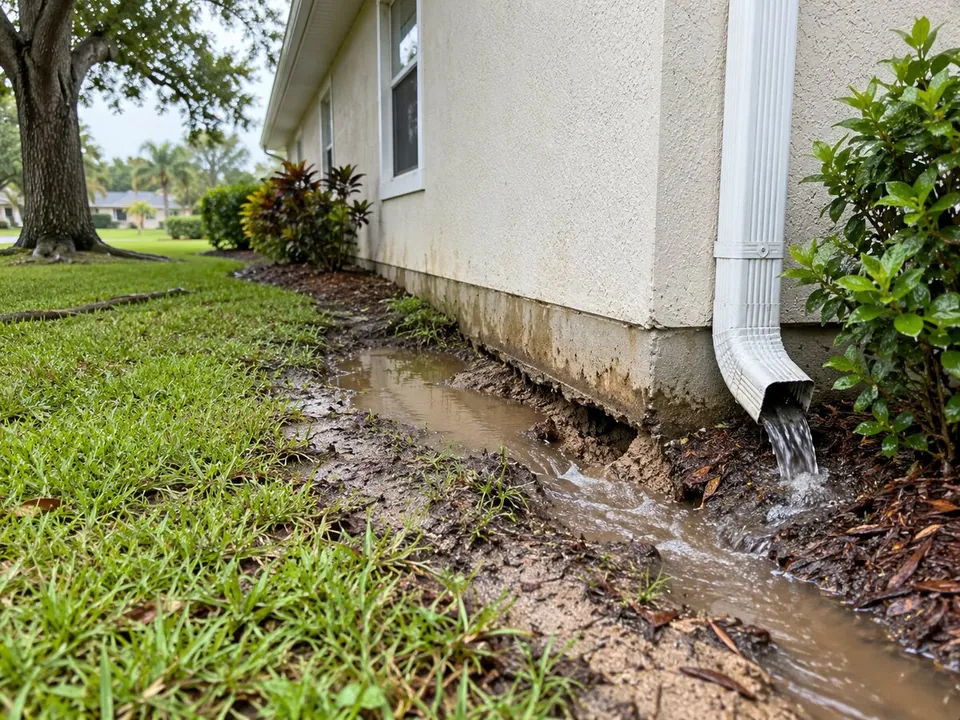
These signs mean soil is leaving or compacting. If you also see cracks in the house, the movement may be reaching the foundation.
- Dips or low spots forming in a yard, driveway or patio
- Bare patches or small holes near a downspout or a wall
- Water pooling in the same place after every storm
- Cracks that follow the edge of a slab or wall
- A seawall or retaining wall that leans or leaks soil
How is stabilization done?
The crew locates the weak zone by probing. Then injection points are set on a grid, often in a pattern around the area. Material is pumped at set depths while pressure and flow are watched. When the grout sets, the soil around each point is stronger.
The visible work is small: a few holes, a pump truck and hoses. Afterward, any movement in the slab or wall is checked with level readings. If settlement continues, additional points or other repairs can be planned.
What works with stabilization?
It pairs well with other repairs. Void filling closes gaps under concrete, while stabilization strengthens the ground below. Retaining wall repair relies on firm soil behind the wall. Seawall repair often needs washed-out fill replaced or stabilized.
Fixing drainage matters as much as the injection. Gutters, downspout extensions and grading keep new water away so the repair lasts.
What does soil stabilization cost?
Price follows the area, depth, soil type and access. A small spot near a downspout is a short job. A long seawall edge or a parking lot is a big one. Compared with excavating and replacing soil, injection is often easier and less disruptive.
Estimates are free. Ask what material is planned, why, and what the warranty covers. Our repairs carry a lifetime transferable warranty.
Do I need a permit?
Ground work close to the water, a seawall or a structure can need a permit, and oceanfront work seaward of the Indian River County Coastal Construction Control Line needs a Florida DEP permit. Ask the building office that covers your address, such as the county, Sebastian or the Town of Indian River Shores.
How do drainage fixes protect the work?
Stabilized soil still needs dry feet. Send roof water at least several feet from the foundation with downspout extensions. Slope soil away from the wall. Check that irrigation heads do not spray at the house or under a slab edge.
On barrier island lots, remember that groundwater also rises from below. You cannot stop tides, but you can keep surface water from adding to them. A repair that includes drainage lasts noticeably longer than one that does not.
Will stabilized soil change how water moves on my lot?
A little. Treated soil is denser, so water tends to run across it rather than soak straight down. That is usually good, because it stops fine sand from being carried away, but it means grading and drainage matter more. Walk the lot after the next heavy rain and watch where water goes.
If a patch of ground stays soggy even after treatment, a buried leak or a high spot in the water table may be the reason. A plumber or a drainage contractor can help sort that out.
Where we stabilize soil
We stabilize soil across the Vero Beach area, including Hutchinson Island South and Port St. Lucie. For the full list of repairs, see our services page. To book a visit, use the contact page.
Soil Stabilization FAQs
How long does stabilized soil last?
The treated soil is meant to last. Its life depends on whether new water keeps washing it out, so fix drainage as well.
Is it safe for plants and groundwater?
Ask your installer for the product data sheet. Cured grout is generally inert, but check for your site.
Can stabilization raise a slab?
It can help raise light settlement, but lifting is better done with foam or piers.
How long does it take?
A small area can be done in a day. Larger jobs take longer.
Do I need a soil test first?
On larger jobs, yes. A soil report shows how deep weak layers go and how much material is needed.
Is the work warrantied?
Our repairs carry a lifetime transferable warranty. Ask for the written terms.
Where We Work
- Soil Stabilization in SebastianWe serve Sebastian and nearby
- Soil Stabilization in Port St. LucieWe serve Port St. Lucie and nearby
- Soil Stabilization in StuartWe serve Stuart and nearby
- Soil Stabilization in Hutchinson Island SouthWe serve Hutchinson Island South and nearby
- Soil Stabilization in Indian River ShoresWe serve Indian River Shores and nearby
Get Your Soil Stabilization Estimate
Call 772-571-4702 or send the form. We will set up a free visit.